
The Benefits of Kiwis During Pregnancy
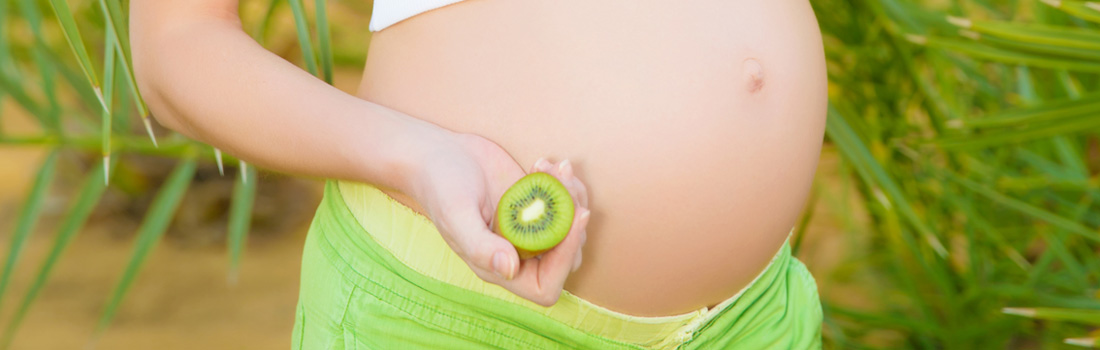
The kiwi is a fruit rich in vitamins and minerals, a valuable support for any type of diet. A balanced and varied diet is always important for protecting our health, but it becomes even more so for pregnant women. When we talk about nutrition during pregnancy, we too often focus only on restrictions: avoiding caffeine, stopping smoking if you are a smoker, avoiding alcoholic beverages, not eating raw meat and fish, avoiding cured meats, etc. Pregnancy is certainly a delicate phase of a woman's life, and it is important to maintain a good dietary balance during this period.
- Therefore, fresh fruit and vegetables should never be missing from a pregnant woman's diet. Seasonal fruit and vegetables provide important micronutrients, such as vitamins, mineral salts, as well as antioxidants and fibre.
- It is therefore essential for expectant mothers to consume two or three portions of fruit daily (300-450 grams per day). In these cases, a particularly interesting fruit is the kiwi, containing Vitamin C, B vitamins, Vitamins E and K, and minerals such as Potassium and Iron.
Kiwifruit in the first trimester of pregnancy
In the first three months of pregnancy, the nutrients in kiwi that benefit the mother and baby are:
- Folic acid (Vitamin B9). When planning a pregnancy and during the first trimester of gestation, folic acid supplementation is recommended. As the most common and severe congenital defects arise precisely between conception and the 8th-12th week of pregnancy, it is necessary for this vitamin supplement to begin at least one month before conception and continue throughout the first trimester. For this reason, including two kiwis, green, yellow, or red, in the future mother's usual diet, which contain significant amounts of folate, is certainly beneficial for the woman and her baby.
- Vitamin C. Ascorbic acid (vitamin C) is vital for the formation of foetal neurotransmitters, which are fundamental for correct brain function. Furthermore, foods rich in vitamin C, such as kiwis, protect the expectant mother from the harmful effects of free radicals thanks to their antioxidant action. A 150g portion of green kiwis covers more than 100% of the reference intake (PRI) for vitamin C for pregnant women. (NRV, Nutritional Reference Values, derived from EFSA DRVs 2019). Vitamin C is also good for pregnant women because it aids the absorption of iron from food, a mineral that is particularly important for preventing anaemia. (during and after pregnancy). Good iron levels are obviously also good for the baby.

- Calcium is essential for the formation of bones and teeth, but not only. Correct intake of calcium is also very important for lfor the development of the child's muscles and heart, as well as for the future mother's body in general: this is why the calcium requirement during pregnancy increases from 1000 mg to 1200 mg per day. When a pregnant woman does not consume enough calcium through her diet, her body takes it from her skeleton, thus reducing bone mass. (potentially dangerous factor for when the woman enters menopause, a condition that leads to a further decrease in bone mass, increasing the risk of osteoporosis). Therefore, one should not give up on milk and dairy products, which are the main dietary sources of highly absorbable calcium. However, in case of lactose intolerance or if one prefers to eat plant-based sources of calcium, it is useful to remember that a medium kiwi fruit weighing 150 g provides 38 mg of calcium. (CREA database, Research Centre for Food and Nutrition).
Kiwi in the 2nd trimester of pregnancy
In the second trimester of pregnancy, particularly beneficial nutrients from kiwi for the expectant mother are:
- Dietary fibre. Thanks to its high fibre content, kiwi can help maintain bowel regularity and counteract constipation. Pregnancy, in fact, can cause women a series of intestinal problems, especially constipation, due to higher hormone levels that slow down digestion and relax intestinal muscles. A 150g portion of golden kiwi covers about 16% of the recommended daily intake (AI) levels of fibre for pregnant women. (SIGO 2018 – Italian Society of Gynaecology and Obstetrics).
- Potassium and Magnesium. During pregnancy, the daily nutritional requirement for these two precious minerals increases significantly: an increase of between 25% and 50% compared to normal is estimated. Potassium and magnesium help the expectant mother to keep the various body changes under control and become allies in promoting the healthy growth of the baby and reducing the risks of premature birth. In kiwi, we mainly find potassium, which in pregnancy improves muscle activity, including cardiac health and blood pressure, ensures a more stable mood, reduces the annoying feeling of tiredness and exhaustion, and is also useful for counteracting the first intestinal irregularities, which appear precisely at this stage. A 150 g portion of green kiwi covers about 17% of the recommended daily intake (AI) levels of potassium for pregnant women. (NRV, Nutritional Reference Values, derived from EFSA DRVs 2019).

Kiwis in the third trimester of pregnancy
In the last trimester of pregnancy, kiwi fruit promotes the well-being of the expectant mother because it contains:
- Energy and healthy sugars. This quarter, it is important to start paying particular attention to gestational diabetes. This is a type of diabetes that can develop from the 5th-6th month of pregnancy, and it usually resolves spontaneously at the time of delivery, but it can have significant consequences for the unborn child. Pregnant women are usually advised to avoid simple sugars. (e.g. sweets and sugar in general) and to eat low-glycemic index fruit. Thanks to their high water content, kiwis have a lower glycaemic index than many other fruits.100g of kiwi fruit contain only the equivalent of 1 teaspoon of glucose. This means the fruit will not significantly raise blood sugar levels, especially when eaten on a full stomach, i.e. at the end of a meal. However, it is sweet to the taste and capable of satisfying the future mother's craving for sugary food.
- Vitamin K. This vitamin ensures the proper functioning of an enzyme that allows the synthesis of certain proteins involved in blood clotting and promotes wound healing. Vitamin K plays a primary role in the health of the cardiovascular system, as it reduces the risk of calcification in blood vessels and the formation of atherosclerotic plaque (atherosclerosis). Furthermore, by mobilising calcium from blood vessels and soft tissues towards the bones, it helps maintain skeletal health. A medium kiwi weighing around 100g contains approximately 40µg of Vitamin K. Vitamin K levels become increasingly important as the due date approaches.

Side effects of kiwi in pregnancy
If you've never had problems with kiwi before pregnancy, it's generally safe to continue enjoying it during gestation. However, rarely some women may develop an allergy to kiwi after eating it. (with the appearance of itching or hives). This happens due to cross-reactivity (association of two or more allergies); In fact, someone who is allergic to kiwi is very likely to also have an allergy to pollen or latex. Kiwi contains molecules associated with the so-called “Lattice-fruit syndrome” and, in case of latex allergy, it is advisable to be careful when consuming this fruit.Scientific collaboration Dr Raffaella Cancello, Nutritionist Researcher, Department of Medical and Rehabilitative Sciences with an endocrino-metabolic focus, Laboratory of Research in Nutrition and Obesity, IRCCS-Istituto Auxologico Italiano Milan Essential bibliography:
- Richardson DP, Ansell J, Drummond LN. The nutritional and health attributes of kiwifruit: a review. Eur J Nutr. 2018;57(8):2659-2676. doi:10.1007/s00394-018-1627-z
- European Food Safety Authority (EFSA). Dietary Reference Values for Nutrients: Summary Report. EFSA Supporting Publication; 2017
- Kumar A, Kaur S. Calcium: A Nutrient in Pregnancy. J Obstet Gynaecol India. 2017;67(5):313-318. doi:10.1007/s13224-017-1007-2
- Shahrook S, Ota E, Hanada N, Sawada K, Mori R. Vitamin K supplementation during pregnancy for improving outcomes: a systematic review and meta-analysis. Sci Rep. 2018;8(1):11459. Published 2018 Jul 30. doi:10.1038/s41598-018-29616-y